Is A Curved Monitor Better . If desk space is not an issue, curved monitors also work much better when it comes to dual or triple monitor setups. In contrast, flat monitors get less effective as. Dell U3419W UltraSharp 34Inch Curved USBC Monitor Computer Reviews from www.popzara.com Flat screens are generally cheaper, lighter and easier to transport. Is a curved monitor better than a flat one? Accepting that you’re contemplating skipping into the pc gaming scene.
Stress Strain Curve For Metals. It is the energy absorbed per volume unit up to the elastic limit. Mathematically, hooke’s law is commonly expressed as:
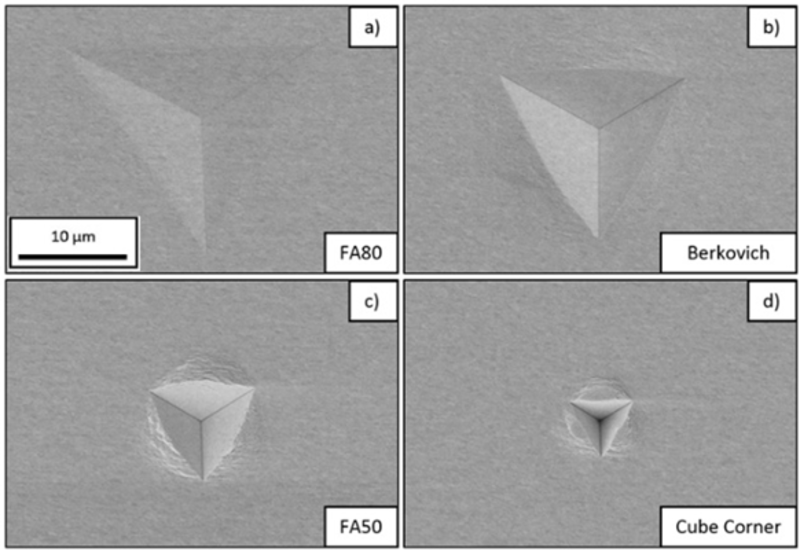
Advanced nanoindentation for the extraction of material flow curves from www.oeaw.ac.at
What is stress strain curve? The formula for the modulus of resilience is 1/2 x σ x ε = 0.5 x (fl/ae). It can be obtained from tensile testing of material in the universal testing machine following standards below, e.g.
The Curve (3) Is Shown In Fig.
Elastomers are the ones that strains more w/ a lower stress. Where f is the force, x is the extension in length, and k is the constant of proportionality known as the spring constant in n/m. Mathematically, hooke’s law is commonly expressed as:
(B) Annealed Copper At A Strain Rate Of 10 −3 /S.
Then a graph is plotted between the stress and the strain produced. All the metals behave like an elastic material up to a specific range. It is unique for each material and is found by recording the amount of deformation (strain) at distinct intervals of tensile or compressive loading (stress).
What Is Stress Strain Curve?
The last two indicate ductility. The formula is e = σ / ε pa. (a) en25 steel at 1000 o c;
Hence, Young Modulus Of Elasticity Is Defined As The Ratio Of Longitudinal Stress To.
The formula for the modulus of resilience is 1/2 x σ x ε = 0.5 x (fl/ae). Others, which are more ductile, including most metals, experience some plastic deformation and possibly necking before fracture. Work hardening (or strain hardening.
A Typical Graph For Metal Is Shown In The Figure Below.
Introduction to stress strain curve. Stress strain diagram is an important graphical measure of material’s mechanical properties. Astm e8 or is 1608 for metals, astm d638 for plastics and astm d3039 for composites.


Comments
Post a Comment